
Description
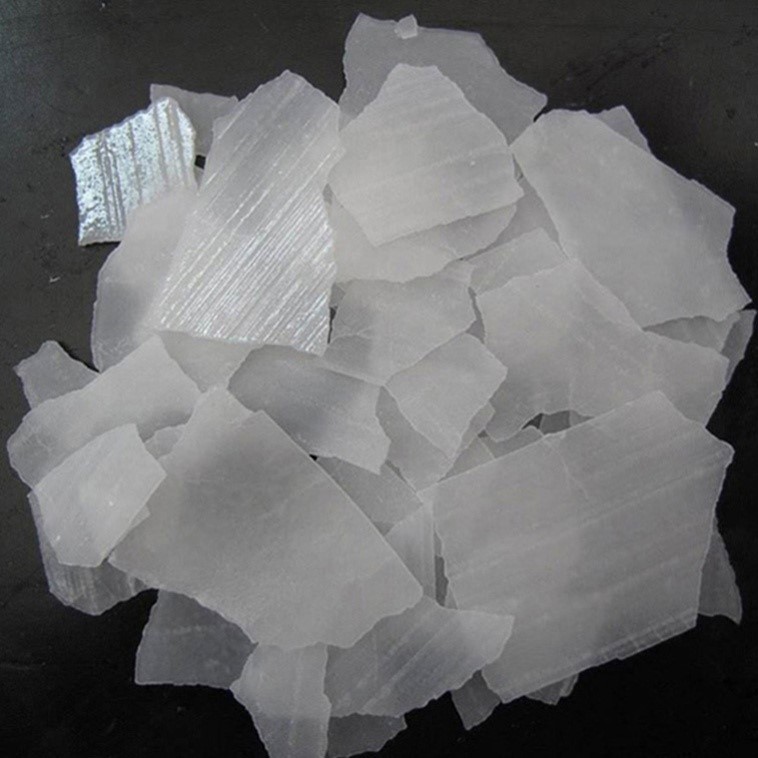
Caustic soda flakes are white, odorless, and crystalline. They have a strong alkaline nature, with a pH of around 14.
They are also hygroscopic, meaning they readily absorb moisture from the air. When dissolved in water, they release a significant amount of heat in an exothermic reaction.
The chemical formula is NaOH, and its molar mass is approximately 40.00 g/mol.
Chemical & Physical Properties
| Property | Specification / Value |
|---|---|
| Chemical Formula | NaOH |
| Molecular Weight | 40.00 g/mol |
| Appearance | White, crystalline flakes |
| Purity | Typically 98–99% NaOH |
| Solubility | Highly soluble in water; dissolution is strongly exothermic |
| Hygroscopic Nature | Absorbs moisture from air; requires dry, airtight storage |
| Melting Point | ~318 °C |
| Boiling Point | ~1390 °C |
Uses Caustic soda flakeas / Sodium hydroxide flakes.
Caustic soda flakes have a wide range of uses across many industries due to their strong alkaline properties.
Pulp and Paper:
Used in the pulping process to dissolve wood fibers, helping to extract cellulose for paper production.
Cleaning Products:
It’s a key ingredient in many soaps, detergents, and heavy-duty degreasers. Its ability to convert fats and greases into soap makes it an effective drain cleaner.
Helps in adjusting the pH of water and to neutralize acidic waste streams.
Chemical Manufacturing:
It serves as a strong base in the production of various chemicals, including sodium salts and bleach.
Food Processing:
Used to peel fruits and vegetables, process chocolate, and cure foods like olives with regulated quantity .
Textile industry,
Used for mercerizing cotton fabrics, enhancing their strength, durability, and natural luster.
CAUSTIC SODA FLAKES GRADES
Main Types of Caustic Soda Grades
Caustic soda grades can generally be classified into two categories: production-process grades and application-specific purity grades.
- Membrane Grade Caustic Soda
caustic soda Membrane-grade is manufactured through the modern membrane-cell electrolysis process and offers high purity
The membrane process produces caustic soda with a very low sodium chloride content, often below approximately 100 ppm, depending on the product specification.
Key characteristics:
- High purity
- Very low sodium chloride content
- Low levels of other impurities
- Clearer appearance in many commercial forms
- Suitable for applications requiring tighter impurity control
caustic soda Membrane grade is commonly preferred for chemical processing, water treatment, food processing, pharmaceuticals, and other applications where low salt content is important.
- Diaphragm Grade Caustic Soda
Caustic Soda is manufacture through diaphragm cell process.
Compared with membrane-grade sodium hydroxide, it generally contains a higher concentration of sodium chloride and other impurities.
Depending on the specification and manufacturer, the sodium chloride content can be significantly higher, potentially reaching around 1.1%.
Key characteristics:
- Higher salt content than membrane grade
- Generally more economical
- Suitable for many general industrial applications
- Used where very low impurity levels are not essential
Used in industrial cleaning, chemical manufacturing, pulp and paper, and other applications where higher salt levels can be tolerated.
Caustic Soda Grades by Purity and Application
- Technical or Industrial Grade Caustic Soda
Commercial purity is commonly around 98–99%, depending on the product form and specification.
Typical applications include:
- Water and wastewater treatment
- Industrial cleaning
- Pulp and paper production
- Chemical manufacturing
- Textile processing
- pH adjustment
- Oil and gas processing
- Food Grade Caustic Soda (FCC)
caustic soda Food-grade manufactured and tested to meet stringent requirements applicable to food processing.
Products marketed as food grade may comply with standards such as the Food Chemicals Codex (FCC), depending on the supplier and specification.
- Fruit and vegetable peeling
- Food processing
- Oil and fat processing
- Cleaning and sanitation of food-processing equipment
- Certain food manufacturing processes
The key consideration for food-grade caustic soda is not simply the percentage of NaOH, but also strict control of contaminants and trace impurities.
- Pharmaceutical Grade Caustic Soda
Pharmaceutical-grade sodium hydroxide meets applicable pharmaceutical quality standards, including those specified by recognized pharmacopeias such as USP/NF and Ph. Eur., depending on the market and product requirements. Manufacturers strictly control impurities to ensure this grade meets the demanding requirements of pharmaceutical manufacturing and other highly regulated processes
Typical applications include:
- Pharmaceutical manufacturing
- Active pharmaceutical ingredient (API) production
- Chemical synthesis
- Pharmaceutical processing
- Manufacturing of certain excipients and intermediates
The exact purity and impurity limits depend on the applicable pharmacopeial monograph and supplier specification.
- Rayon Grade Caustic Soda
Rayon-grade caustic soda is a historical industry term associated with high-purity caustic soda used in rayon and viscose manufacturing. Historically, highly pure sodium hydroxide was also produced using mercury-cell technology.
However, mercury-cell production has declined substantially because of environmental and regulatory concerns associated with mercury. Modern membrane technology has become an important alternative for producing high-purity caustic soda.

Reviews
There are no reviews yet.