Description
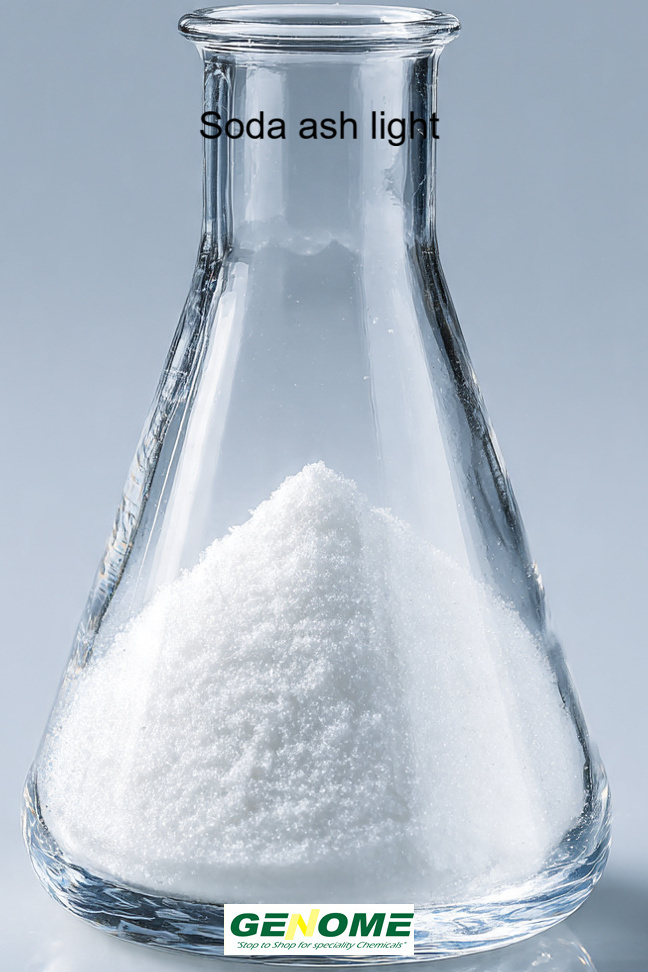
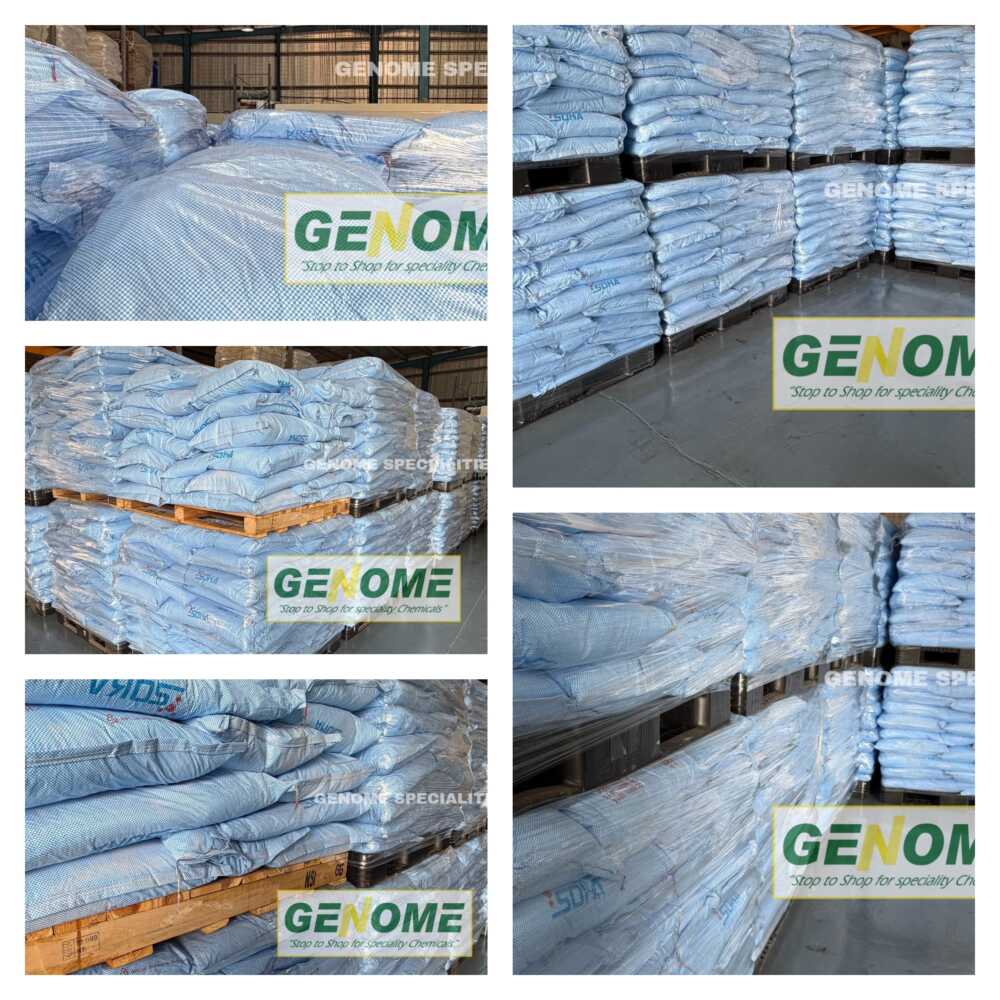
Soda ash light, also known as light sodium carbonate (Na2CO3), or Washing Soda with CAS No 497-19-8 , is a less dense form of sodium carbonate compared to dense soda ash. Genome Specialities is a leading supplier for Soda ash light Industrial chemical.
Properties Soda ash Light:
| Property | Description |
| Chemical Name | Soda Ash Light |
| Chemical Formula | Na₂CO₃ |
| Molar Mass | 105.99 g/mol |
| Appearance | White, odorless powder |
| Physical Form | Fine, light granular solid |
| Density (bulk) | ~0.5–0.6 g/cm³ |
| True Density | ~2.53 g/cm³ |
| Melting Point | 851 °C |
| Solubility in Water | Soluble (≈21.5 g/100 mL at 25 °C) |
| Solubility in Alcohol | Insoluble |
| Hygroscopic Nature | Slightly hygroscopic |
| Odor | Odorless |
Uses of Soda Ash Light :
Soda ash light is a versatile industrial chemical with numerous applications, including:
Glass Manufacturing:
Used to lower the melting point of silica, making it essential for producing various types of glass (container glass, flat glass, etc.).
Detergent Industry:
A key ingredient in the manufacturing of detergent powders and soaps. It acts as a water softener, enhances cleaning power, and helps maintain the pH of the wash water.
Chemical Manufacturing:
Used as a raw material in the production of other sodium compounds like sodium silicate, sodium bicarbonate, and sodium phosphates. It’s also used in processes in the pharmaceutical, textile, pulp and paper, and food processing industries.
Water Treatment:
Used to adjust pH levels, soften water by removing calcium and magnesium ions, and aid in the removal of impurities.
pH Regulation:
Used to increase alkalinity and adjust the pH in swimming pools and various industrial processes.
Other Applications:
Including metallurgy (as a flux in metal refining), dyeing (to ensure proper bonding of dyes to fibers), food industry (as an acidity regulator, stabilizer, and raising agent), and even in taxidermy for removing flesh from bones.

Reviews
There are no reviews yet.