

Description
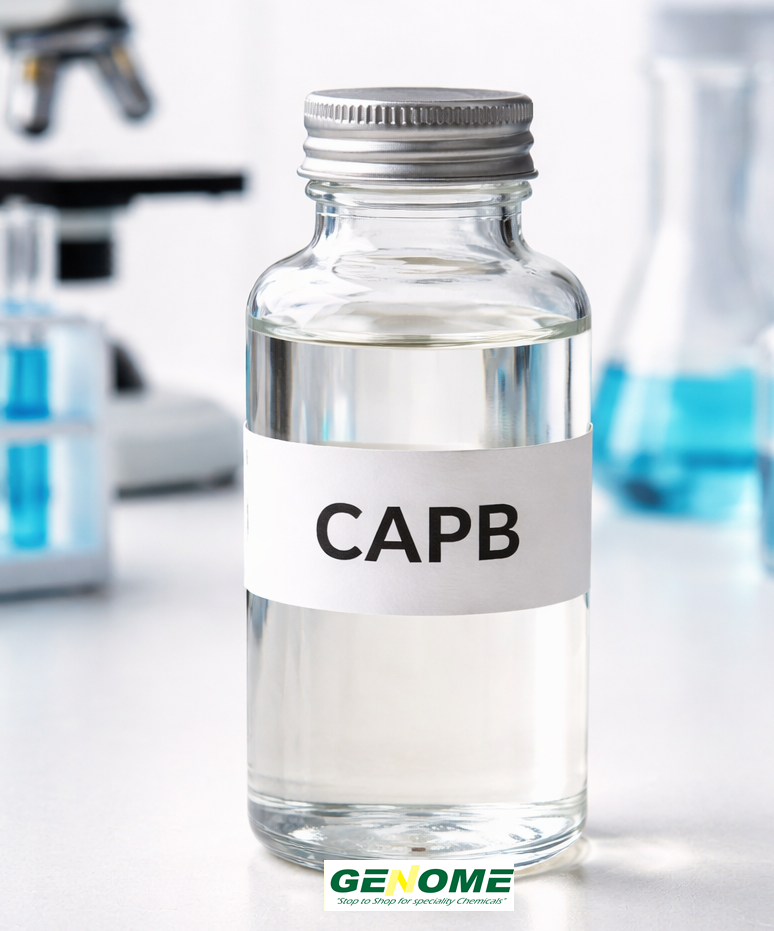
GENOME SPECIALITIES FZC is a trusted premium supplier for CAPB which is Cocamidopropyl Betaine, a compound commonly used in personal care products. A surfactant derived from coconut oil and dimethylaminopropylamine
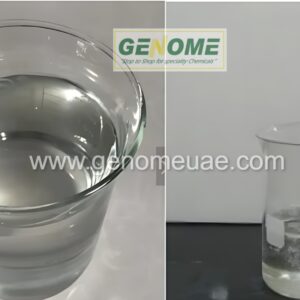
- Appears as a viscous pale yellow liquid
- Chemically, it’s a zwitterion. This dual charge helps improve mildness, compatibility, and stability in formulations.
Chemical Properties
| Property | Details |
|---|---|
| Chemical Name | Cocamidopropyl Betaine |
| Chemical Formula | C19H38N2O3 |
| Molecular Weight | 342.52 g/mol |
| Appearance | Clear to slightly yellow viscous liquid |
| Odor | Mild, fatty amine-like |
| pH (1% solution) | 5.5 – 7.0 |
| Solubility | Soluble in water; soluble in ethanol; insoluble in oils |
| Ionic Nature | Amphoteric (can act as both cationic and anionic depending on pH) |
| Surface Activity | High foaming ability; reduces surface tension of water |
| Reactivity | Stable under normal conditions; reacts with strong acids or bases; can form complexes with anionic surfactants |
| Hydrolysis | Resistant under neutral pH; may hydrolyze under strong acidic or alkaline conditions |
| Thermal Stability | Stable up to ~100°C; decomposes at higher temperatures |
| Compatibility | Compatible with anionic, nonionic, and amphoteric surfactants; may precipitate with cationic surfactants |
| Biodegradability | Biodegradable; considered environmentally friendly in formulations |
Genome Capb Applications
1. Personal Care Products:
CAPB is widely used in shampoos, body washes, facial cleansers, and liquid soaps. Its primary function is as a mild surfactant, which helps to remove dirt, oils, and impurities from hair and skin. Unlike harsher surfactants like sodium lauryl sulfate (SLS), CAPB is gentle and less irritating hence its for sensitive skin and baby products. It also contributes to foam formation and stabilization, improving the texture and feel of cleansing products.
2. Shampoos and Hair Care Formulations:
In hair care products, CAPB serves as a co-surfactant with anionic surfactants. It helps to reduce irritation caused by stronger detergents while maintaining good foaming Additionally, it is amphoteric nature can help condition the hair, providing a slight softening and anti-static effect.
3. Skin Care and Cosmetic Formulations:
CAPB is used in topical formulations that require gentle cleansing and foaming properties suitable for sensitive skin . Additionally, it act as a viscosity builder, thickening formulations to improve their feel and application.
4. Household Cleaning Products:
CAPB is employed in mild household cleaners and dishwashing liquids to lift grease and dirt while being gentle on skin compared to traditional detergents.
5. Environmental and Safety Benefits:
CAPB is biodegradable and generally considered eco-friendly. More over its low irritation profile makes it safer for repeated use compared to strong anionic surfactants
Genome CAPB
Not all CAPB is created equal. At GENOME SPECIALITIES FZC, we know that the safety and texture of your final product depend on the purity of your raw materials. A high-purity, ultra-low-irritation amphoteric surfactant that performs beautifully in everything from baby shampoos to high-end facial cleansers.

Reviews
There are no reviews yet.