



Description
Genome Specialities is committed to providing optical brightener solutions designed to enhance the whiteness, brightness, and visual appeal of materials across a range of industrial applications.
Optical brighteners, also known as Optical Brightening Agents (OBAs), Fluorescent Whitening Agents (FWAs), or Fluorescent Brightening Agents (FBAs), are specialized chemical compounds that make materials appear whiter and brighter.
Unlike conventional dyes and bleaching agents, they work through fluorescence, absorbing ultraviolet (UV) light and re-emitting it as visible blue-violet light to help reduce the appearance of unwanted yellowish tones.
At Genome Specialities, we recognize the importance of product quality, consistent performance, and application suitability in industrial brightening processes.
Chemical Properties
| Property | Description / Typical Values |
|---|---|
| Common Chemical Families | Stilbene derivatives (e.g., distyrylbiphenyl), coumarins, benzoxazolyl derivatives, pyrazolines, triazines |
| General Molecular Formula | Varies; often large conjugated aromatic structures containing N, O, S atoms |
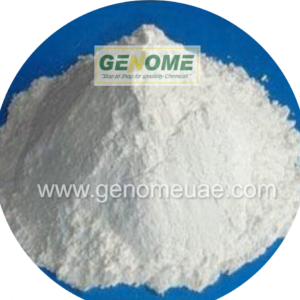
| Appearance | White to slightly yellow crystalline powder |
| Solubility | Water-soluble types: moderate to high; solvent-soluble types: soluble in organic solvents (e.g., alcohols) |
| pH Stability Range | Typically stable between pH 4–10 (laundry detergents around pH 8–10) |
| Melting Point | Usually > 200°C, often 250–350°C depending on structure |
| Fluorescence Peak Emission | 420–470 nm (blue region) |
| UV Absorption Maximum (λmax) | Typically 330–380 nm (UV-A region) |
| Charge Type (Ionic Nature) | Anionic (most laundry brighteners), nonionic, or cationic (for acrylic fibers) |
| Lightfastness | Moderate; tends to degrade under prolonged UV exposure |
| Compatibility | Stable with surfactants, builders, and bleaching systems (except strong oxidizers like chlorine) |
| Thermal Stability | High; suitable for textile processing and plastic incorporation |
| Biodegradability | Many stilbene-derived brighteners are poorly biodegradable |
| Toxicity | Generally low, but can cause environmental persistence |
Optical brighteners enhance perceived whiteness through a fluorescence process.
Many white materials, including textiles and paper, may exhibit a yellowish tint due to their chemical composition, impurities, or aging.
The brightening process involves two main stages:
-
- UV Light Absorption: The optical brightener absorbs ultraviolet light from a suitable light source.
- Visible Light Emission: The absorbed energy is re-emitted as blue-violet visible light, helping compensate for the yellowish appearance of the material.
This process improves the perceived whiteness, brightness, and overall visual quality of the treated product. Performance depends on the optical brightener grade, substrate, formulation, and processing conditions.
Types of Optical Brighteners
Different chemical classes of optical brighteners are used to meet specific industrial requirements.
-
- Stilbene Derivatives: Commonly used in laundry detergents, paper manufacturing, and textile processing.
- Coumarin Derivatives: Used in selected applications requiring specific fluorescence properties.
- Benzoxazole Derivatives: Suitable for certain synthetic fiber and plastic applications, depending on the grade.
- Pyrazoline Derivatives: Used in selected textile and specialty brightening applications.
Genome Specialities recognizes the importance of selecting suitable optical brightener grades according to the material, manufacturing process, and desired end-use performance.
Applications of Optical Brighteners
Textile Industry
Optical brighteners are used in textile processing and finishing to enhance the whiteness and brightness of cotton, polyester, and other suitable fibers.
Detergents and Laundry Products
They are incorporated into laundry detergents and fabric-care formulations to help clothes appear cleaner, brighter, and whiter after washing.
Paper and Pulp Industry
Optical brighteners are used in paper pulp, coatings, and surface treatments to improve paper brightness and support high-quality printing and presentation.
Plastics Industry
Selected grades are incorporated into plastic materials to improve their visual whiteness and help counteract unwanted yellowish tones.
Specialty Applications
Certain optical brighteners are used in specialized industrial formulations where enhanced fluorescence, whiteness, or brightness is required.
Benefits of Optical Brighteners
-
- Enhanced Whiteness: Helps improve the perceived whiteness of suitable materials.
- Improved Brightness: Creates a brighter, cleaner visual appearance.
- Better Product Presentation: Enhances the aesthetic appeal of finished products.
- Versatile Applications: Available in different grades for various industrial processes.
- Application-Specific Selection: Enables the selection of suitable products based on substrate compatibility and processing requirements.

Reviews
There are no reviews yet.