

Description
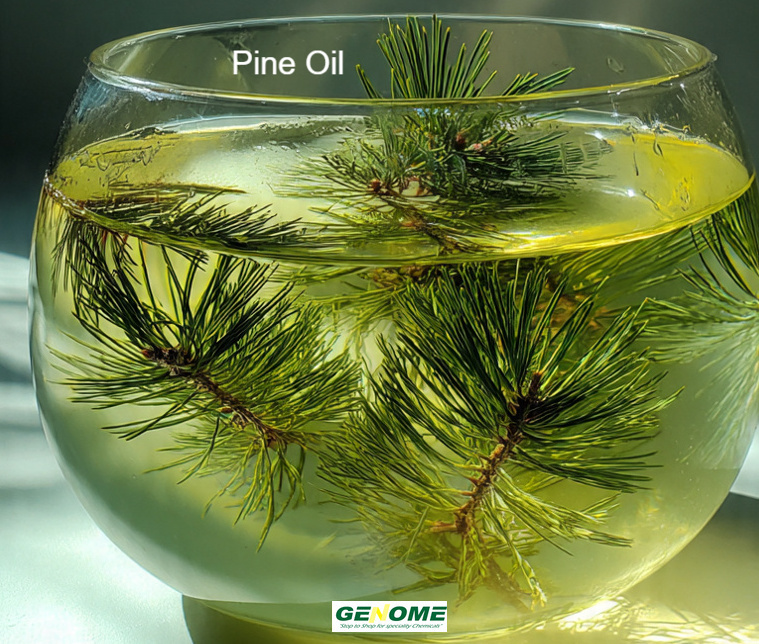
Genome Specialities FZC supplies Pine Oil 85% for industrial and commercial applications including mineral flotation, cleaning formulations, disinfectants, solvents, textiles, paints, coatings, adhesives, and selected agricultural formulations.
Pine Oil 85% is a high-terpene-alcohol grade of pine oil, typically characterized by a high content of terpene alcohols, particularly alpha-terpineol.
It is supplied as a clear to pale-yellow liquid with a distinctive pine-like odor
Its combination of solvency, surface activity, hydrophobicity, and characteristic aroma makes it useful across several industrial sectors.
Chemical Properties
| Property | Description |
| Appearance | Clear to pale yellow liquid |
| Odor | Strong, characteristic pine odor |
| State | Liquid |
| Density | ~0.93–0.95 g/cm³ at 25 °C |
| Boiling point | ~210–230 °C |
| Melting point | Below 0 °C |
| Solubility in water | Slightly soluble |
| Solubility in solvents | Soluble in alcohol and organic solvents |
| Volatility | Low volatility |
| Refractive index | ~1.47–1.48 |
| Flash point | ~65–75 °C |
Industrial Applications of Pine Oil 85%
- Mineral Flotation
One of the most important industrial uses of pine oil is in froth flotation.
In mineral processing, pine oil can function as a frother that helps generate a stable froth layer.
Valuable mineral particles attached to the froth can then be separated from the ore slurry.
Pine oil is used in flotation applications involving minerals such as:
- Copper
- Lead
- Zinc
- Nickel
- Other sulfide and non-sulfide minerals
The appropriate dosage depends on the ore characteristics, flotation circuit, collectors, pH, and other process conditions.
- Cleaning Products and Disinfectant Formulations
Pine oil is widely associated with industrial and institutional cleaning formulations because of its characteristic odor, solvency, and surface-active properties.
It may be incorporated into:
- Floor cleaners
- Industrial cleaners
- Deodorizers
- Surface-cleaning formulations
- Concentrated cleaning products
The suitability of a particular Pine Oil 85% grade depends on the formulation and regulatory requirements of the finished product.
- Solvent Applications
Pine oil can be used as a solvent or co-solvent for selected materials, including certain:
- Resins
- Gums
- Oils
- Coating ingredients
- Adhesive components
- Ink formulations
Its relatively low volatility compared with some conventional solvents can be advantageous in specific formulations.
- Paints, Inks and Coatings
Pine oil may be used in the manufacture of selected paints, inks, coatings, and related formulations where its solvency and compatibility with organic materials are beneficial.
Formulators should verify compatibility with the resin system and other formulation components before commercial production.
- Adhesives
Pine oil can be incorporated into certain adhesive systems as a solvent or formulation component. Its suitability depends on the adhesive chemistry, required drying characteristics, and compatibility with other raw materials.
- Textile Processing
In textile processing, pine oil may be used in selected scouring, wetting, emulsifying, and auxiliary formulations.
Its surface-active and solvent properties can support the processing of certain textile materials and formulations.
- Agricultural Formulations
Pine oil and terpene-based materials can be used in selected agricultural formulations, including products designed for pest, weed, or plant-management applications.
However, the regulatory status of pine oil in agricultural products varies by country and intended use. Finished formulations should comply with the applicable local regulations.
Pine Oil 85% for Mineral Flotation
For mineral-processing customers, Pine Oil 85% flotation grade can be considered where a terpene-based frother is required.
Its role in flotation is to help produce a suitable froth structure so that hydrophobic mineral particles can be selectively recovered.
Flotation performance depends on more than the pine oil grade alone. Important variables include:
- Ore mineralogy
- Particle size
- Pulp density
- pH
- Collector type
- Frother dosage
- Water chemistry
- Flotation temperature
- Residence time
Laboratory testing and plant trials are recommended when changing frother grades or suppliers
Reviews
There are no reviews yet.