
Description
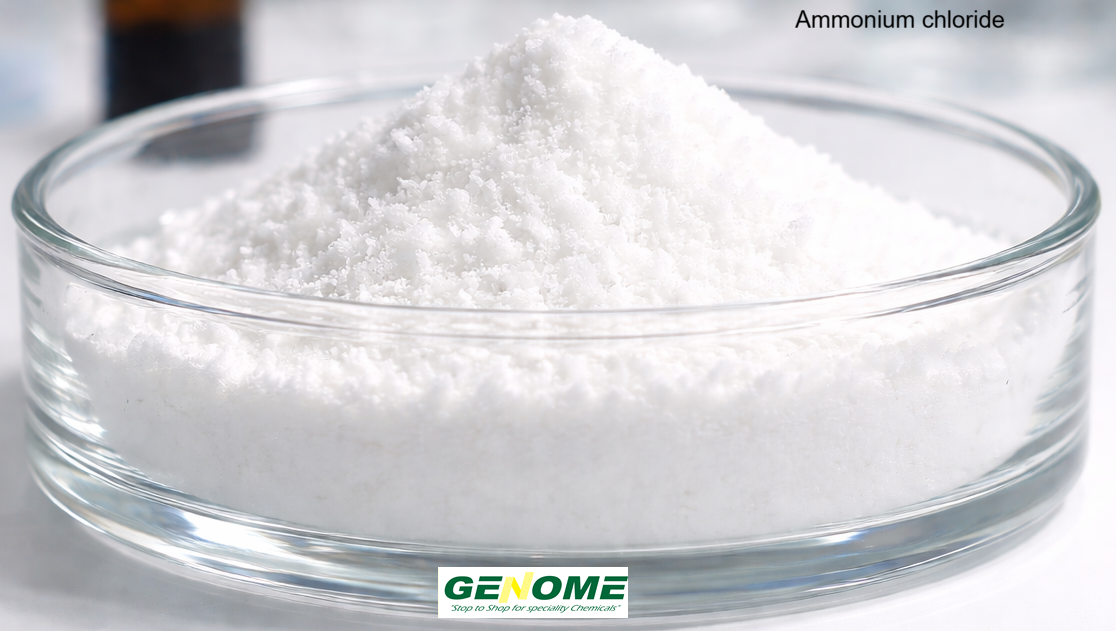
Ammonium Chloride (NH₄Cl), also known as Sal Ammoniac, is a white crystalline inorganic compound widely used across agriculture, pharmaceuticals, food processing, metalworking, batteries, and laboratory applications.
Genome Specialities FZC supplies ammonium chloride in multiple grades to meet the requirements of industrial, agricultural, food, pharmaceutical, and laboratory customers.
With its high water solubility, slightly acidic aqueous solution, and versatile chemical properties, ammonium chloride is an important raw material for numerous industrial and commercial applications.
Chemical Properties Of Ammonium Chloride
| Property | Description / Value |
| Chemical name | Ammonium Chloride |
| Synonyms | Sal ammoniac |
| Chemical formula | NH₄Cl |
| Molecular weight | 53.49 g/mol |
| Chemical class | Inorganic ammonium salt |
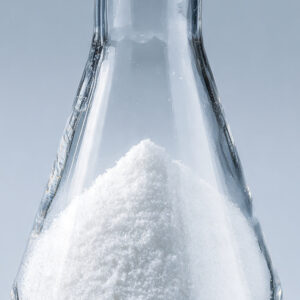
| Appearance | White crystalline solid or powder |
| Odor | Odorless |
| Taste | Saline (do not taste in practice) |
| pH (5% aqueous solution, 25 °C) | 4.5 – 6.0 (slightly acidic) |
| Solubility in water | Highly soluble |
| Solubility in alcohol | Slightly soluble |
| Hygroscopic nature | Slightly hygroscopic |
| Thermal behavior | Decomposes on heating |
| Decomposition products | Ammonia (NH₃) and Hydrogen chloride (HCl) |
| Reaction with bases | Releases ammonia gas |
| Reaction with acids | Generally stable |
| Oxidizing/reducing nature | Neither oxidizing nor reducing |
| Ionic nature | Ionic compound |
| Stability | Stable under normal storage conditions |
| Incompatibilities | Strong bases, strong oxidizing agents |
Common Applications of Ammonium chloride
Agriculture & Fertilizers
Ammonium chloride is an effective nitrogen fertilizer and provides nitrogen in a form that can be utilized by plants.
used in agricultural applications involving crops such as rice and wheat.
Pharmaceutical Applications
Used as an expectorant in certain cough and respiratory formulations.
Used as a systemic acidifier in specific medical applications.
Metalworking & Soldering
Used in soldering, tinning, and galvanizing.
When heated, it helps remove metal oxides from surfaces, supporting better contact and adhesion during metalworking processes.
Battery Manufacturing
Used as an electrolyte in Leclanché-type dry-cell batteries, where it contributes to the electrochemical process within the cell.
Food Industry
Identified by the European food additive number E510.
used as a flavoring agent in certain foods, particularly salty licorice (salmiak) popular in Nordic countries.
It can also serve as a yeast nutrient and acidity regulator in selected food applications where permitted by applicable regulations.
Textile Industry
Used in textile dyeing and printing processes, including applications where it assists with dye fixation and processing.
Grades Of Ammonium Chloride
Technical Grade
Technical grade ammonium chloride is the most common and least pure form.
produced for industrial and agricultural applications where very high purity is not essential.Purity:
Typically 99% or higher, with a higher tolerance for impurities like heavy metals and sulfates compared to other grades.
Uses:
Agriculture:
Used as a nitrogen fertilizer, particularly for crops like rice and wheat.
Metalworking:
Acts as a flux in processes like soldering and galvanizing to clean metal surfaces.
Textiles:
Used in dyeing and printing to help fix dyes on fabric.
Batteries:
Utilized as an electrolyte in dry cell batteries.
Food Grade
Food grade ammonium chloride, also known by its European food additive code E510, is manufactured to strict safety standards for consumption. It must meet purity requirements to be safe for use in food products.
Purity: High purity with minimal levels of contaminants.
Uses:
Flavoring Agent: Provides a distinct salty flavor in foods, most notably in salty licorice (salmiak) common in Nordic countries.
Yeast Nutrient: Serves as a nutrient for yeast in baking and bread-making.
Acidity Regulator: Used to control the pH level in certain food products.
Pharmaceutical Grade
This is the highest purity grade of ammonium chloride, manufactured under strict guidelines to meet the standards of pharmacopoeias like the USP (United States Pharmacopeia).
It is tested rigorously for impurities to ensure it’s safe for medical use.
Purity: Very high, often 99.5% or greater, with extremely low levels of heavy metals and other impurities.
Uses:
Expectorant: A key ingredient in many cough syrups where it helps loosen phlegm and mucus, making it easier to cough up.
Systemic Acidifier: Used in some medical treatments to correct metabolic alkalosis by increasing the acidity of the blood.
Reagent Grade (or ACS Grade)
Reagent grade, often certified by organizations like the American Chemical Society (ACS), is used in laboratories for analytical, research, and educational purposes. Its key characteristic is the exact and reliable concentration of impurities, not just the overall purity.
Purity: Extremely high, often with a minimum assay of 99.9%.
Uses:
Laboratory Analysis: Used in chemical testing and analytical procedures where the presence of even trace impurities could affect the results.
Buffer Solutions: Utilized in creating buffer solutions for controlling pH in experiments.
Education: Employed in scientific experiments and demonstrations in educational settings.
Reviews
There are no reviews yet.