

Description
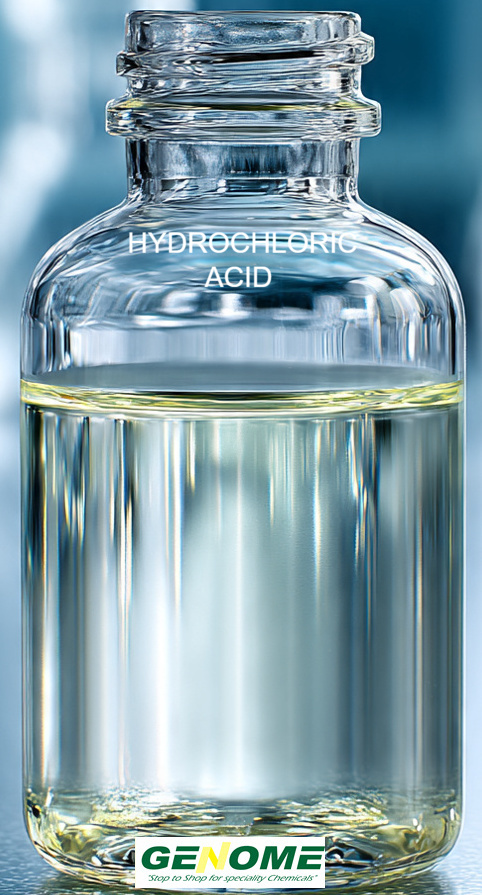
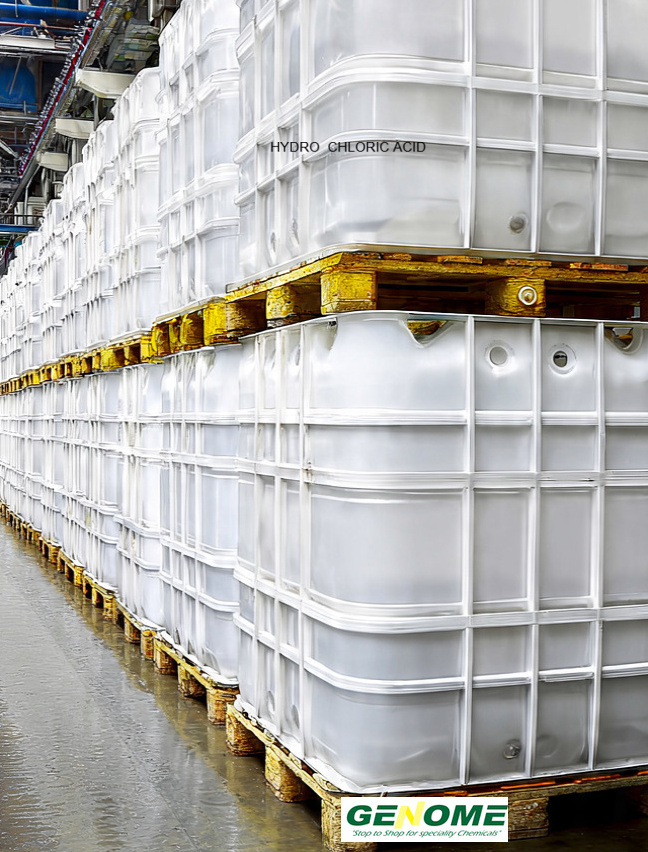
Hydrochloric Acid (HCl) is a strong, highly corrosive mineral acid widely used in industrial manufacturing, laboratories, water treatment, and chemical processing. Also known as muriatic acid, hydrochloric acid is an aqueous solution of hydrogen chloride that plays an essential role in numerous industrial and commercial applications.
Genome Specialities FZC is a trusted supplier of premium-quality Hydrochloric Acid in the UAE, providing reliable chemical solutions to industries that demand consistent quality, safety, and performance
Chemical Properties of HCL
| Property | Description |
| Chemical formula | HCl (aq for hydrochloric acid) |
| Molecular weight | 36.46 g/mol |
| Appearance | Colorless to slightly yellow liquid |
| Odor | Pungent, irritating |
| Density | ~1.18 g/cm³ (concentrated, ~37% HCl) |
| Boiling point | ~108°C (concentrated solution) |
| Melting point | ~-27°C (concentrated solution) |
| Solubility | Completely miscible in water |
| pH | ~0–1 (concentrated solution) |
| Chemical nature | Strong acid |
| Reactivity | Reacts with metals, bases, carbonates; liberates H₂ with active metals |
| Oxidizing property | Not an oxidizer, but can react with oxidizing agents |
| Corrosiveness | Highly corrosive to metals and tissues |
| Common applications | Pickling of steel, pH control, chemical synthesis, laboratory reagent |
Uses and Applications Of HCL
Applications of Hydrochloric Acid
Hydrochloric Acid is one of the most versatile industrial chemicals and is widely used across multiple industries.
Steel Pickling
Hydrochloric Acid removes rust, mill scale, and surface impurities from steel before galvanizing, coating, or manufacturing processes.
Chemical Manufacturing
HCL is used in the production of PVC, chlorides, pharmaceuticals, dyes, fertilizers, and numerous organic and inorganic chemicals.
Water Treatment
Hydrochloric Acid is widely used for pH adjustment in industrial water treatment plants, wastewater treatment facilities, and swimming pools.
Food Processing
pH regulation, starch processing, and sugar refining under controlled industrial standards.
Ore Processing
Hydrochloric Acid assists in refining minerals such as tin, tantalum, and other valuable metals.
Laboratory Applications
It serves as an essential laboratory reagent for chemical analysis, sample preparation, titration, and research.
Oil & Gas Industry
Hydrochloric Acid is used for well acidizing to improve oil and gas extraction efficiency.
Textile Industry
It is used during textile processing, dye manufacturing, and cleaning operations.
Biological Importance
Hydrochloric Acid is naturally produced in the human stomach as gastric acid.
It supports digestion by breaking down food, activating digestive enzymes, and helping eliminate harmful bacteria and microorganisms.
Reviews
There are no reviews yet.