
Description
Genome Specialities is a trusted supplier of Sodium Lactate 60% in the UAE , a premium-quality lactic acid salt produced through natural fermentation.
Our Sodium Lactate 60% offers excellent moisture retention, pH regulation, and preservative properties, making it ideal for food, pharmaceutical, cosmetic, and industrial applications
The “60%” designation indicates that the product is a solution of 60% sodium lactate by weight, with the remaining 40% being water.
This is a very common commercial form of the ingredient, particularly in the personal care and soap-making industries.
Chemical properties of Sodium Lactate Powder
| Property | Specification |
| Product Name | Sodium Lactate Powder |
| Chemical Name | Sodium Lactate |
| Chemical Formula | C₃H₅NaO₃ |
| Molecular Weight | 112.06 g/mol |
| CAS Number | 72-17-3 |
| EINECS Number | 200-772-0 |
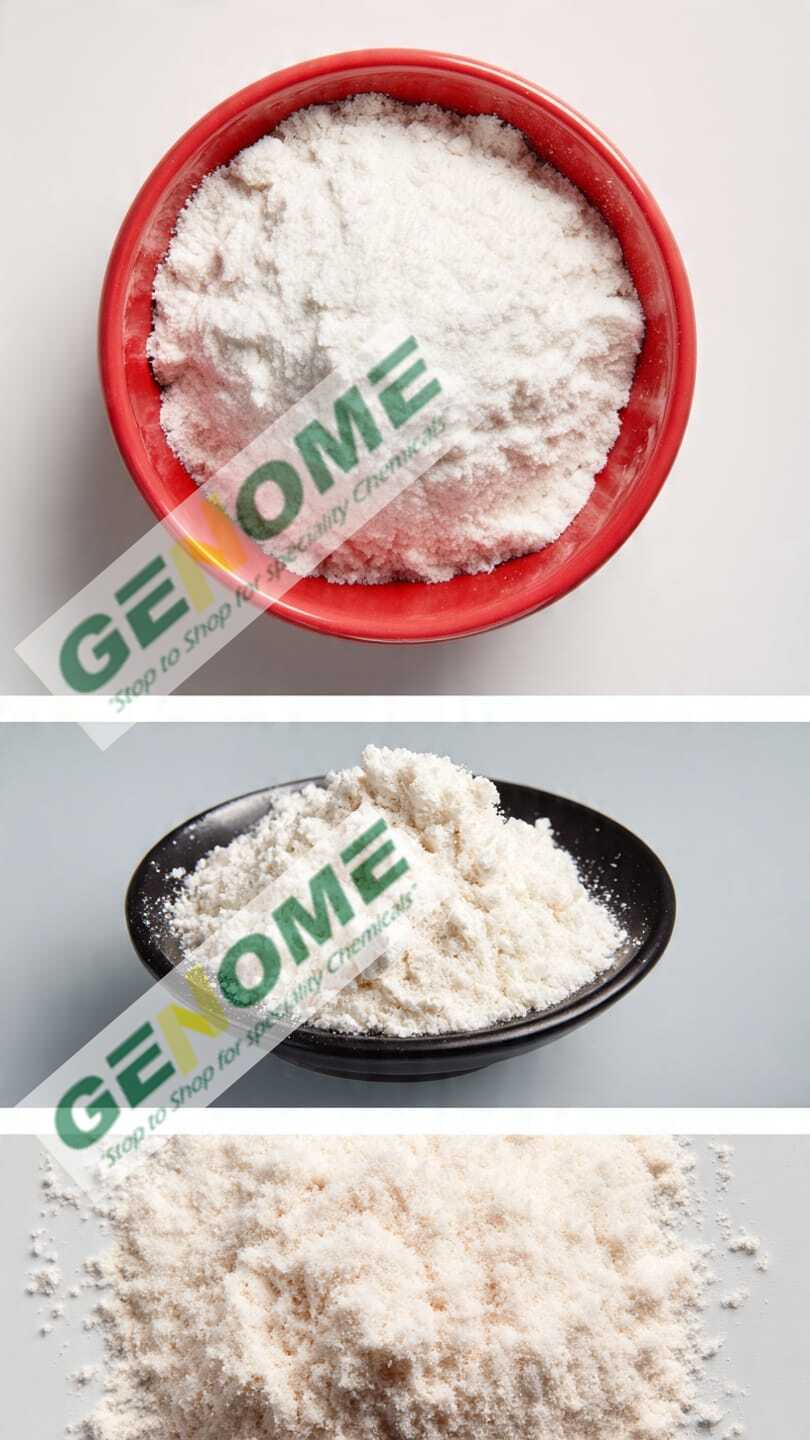
| Appearance | White to off-white crystalline powder |
| Odor | Odorless or faint characteristic odor |
| Taste | Mild saline taste |
| pH (10% Solution) | 6.5–8.5 |
| Solubility | Freely soluble in water; slightly soluble in alcohol |
| Density (Bulk) | 0.60–0.90 g/cm³ (typical) |
| Melting Point | Decomposes upon heating (no distinct melting point) |
| Moisture Content | ≤ 2.0% (typical) |
| Assay | ≥ 98.0% |
| Sodium Content | Approximately 20–21% |
| Heavy Metals | ≤ 10 ppm |
| Chloride | ≤ 0.05% |
| Sulfate | ≤ 0.01% |
| Loss on Drying | ≤ 2.0% |
Applications of Sodium Lactate
Cosmetics and Personal Care:
used in creams, lotions, and soaps as a powerful humectant—an ingredient that attracts and retains moisture.
It is a more effective humectant than glycerin and helps to provide lasting hydration, soften the skin, and reduce the greasiness of oil-based products.
Soap Making:
This is one of its most popular uses. Adding sodium lactate 60% to cold process soap recipes helps to create a harder, more durable bar that can be unmolded faster.
It also contributes to a smoother texture and reduces shrinkage during the curing process.
Food Industry:
Preservative: It has antimicrobial properties that help to extend the shelf life of food products.
Acidity Regulator: It helps to stabilize the pH of food, preventing spoilage and maintaining desired flavor profiles.
Bulking Agent: It adds volume and texture to products.
Pharmaceutical and Medical:
Although the 60% solution is generally not used for direct medical purposes, a more purified, sterile form of sodium lactate is used in intravenous (IV) solutions like Lactated Ringer’s Solution.
It is administered to treat dehydration, electrolyte imbalances, and metabolic acidosis, as it is metabolized in the body to produce bicarbonate, which helps to correct blood pH.
Grades of Sodium Lactate
Food Grade (E325):
Meets the purity and safety standards for human consumption and is used in the food industry.
Cosmetic/Technical Grade:
Suitable for external applications like soaps and personal care products. This is the most common grade for the 60% solution.
Pharmaceutical Grade (USP/BP):
The highest purity grade, meeting the strict standards of pharmacopoeias for use in medications and sterile solutions. It is subject to rigorous testing for heavy metals and other impurities.
Reviews
There are no reviews yet.