Description
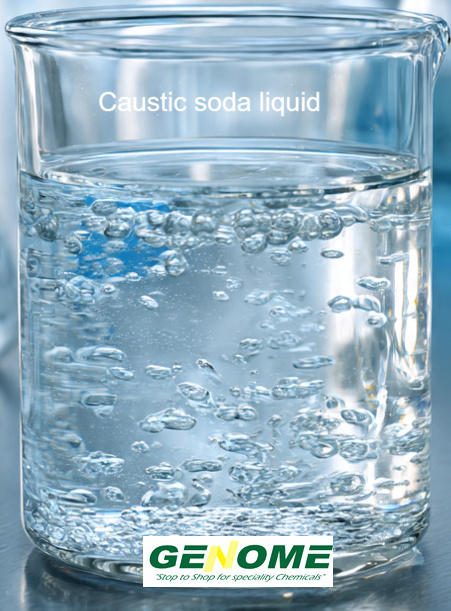
Genome Specialities is a trusted Sodium Hydroxide Liquid supplier in the UAE, providing high-quality caustic soda solutions for a wide range of industrial applications.
Sodium Hydroxide Liquid, also known as caustic soda or lye.
It’s is a highly corrosive and alkaline solution produced by dissolving solid sodium hydroxide (NaOH) in water.
Used in manufacturing, water treatment, cleaning products, food processing, and chemical production
Properties and Characteristics of Sodium Hydroxide Liquid
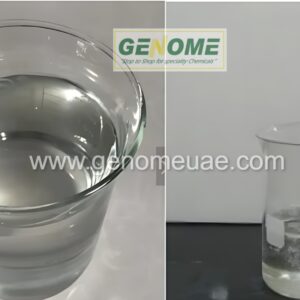
Liquid sodium hydroxide is a colorless
CS is odorless solution that’s denser than water.
It’s a strong base with a very high pH, capable of reacting violently with acids and many metals.
When solid NaOH dissolves in water, it’s a highly exothermic reaction, meaning it releases a significant amount of heat. This can be enough to ignite flammable materials or cause splashing of the corrosive liquid.
Sodium hydroxide is its hygroscopic nature.
It readily absorbs moisture and carbon dioxide from the air, which can change its chemical composition over time.
Chemical & Physical Properties of Sodium Hydroxide liquid
| Property | Specification / Value |
|---|---|
| Chemical Formula | NaOH |
| Appearance | Clear, colorless to slightly cloudy liquid |
| Concentration | Commonly 50% by weight |
| Specific Gravity @ 60°F (15.6°C) | ~1.53 |
| pH | >13 (strongly alkaline) |
| Boiling Point | ~145°C (for 50% solution) |
| Freezing Point | ~−20°C (varies with concentration) |
| Solubility | Completely miscible with water; dilution is highly exothermic |
Uses and Applications of sodium hydroxide
Genome Specialities fzc is reliable Sodium Hydroxide Liquid Supplier in UAE
Due to its strong alkaline nature, liquid sodium hydroxide has many industrial and household uses:
Manufacturing:
It’s a fundamental chemical in the production of pulp and paper, textiles, soaps, and detergents.
Cleaning:
It’s an active ingredient in many drain and oven cleaners, where it breaks down fats and greases through a process called saponification.
Water Treatment:
Caustic Soda liquid is used for increasing pH of water and to remove heavy metals
Food Processing:
it’s used to cure foods and to peel fruits and vegetables for canning under Guide Lines.
The most common concentrations for liquid caustic soda are 50% and 32% (or 33%) by weight.
The concentration level of Caustic soda Liquid depends on the application as well the storage and handling modes used.
Purity Grades of Sodium Hydroxide liquid
The main grades are:
Industrial/Technical Grade:
Used in paper manufacturing, petroleum refining, and general chemical production.
Food Grade:
Used in the food and beverage industry for applications like food processing, cleaning, and pH adjustment.
It has a higher purity (often exceeding 99%) and is subject to strict regulations from bodies like the FDA to ensure it’s free from harmful heavy metals and other contaminants.
Pharmaceutical Grade:
This is the highest purity grade, with an assay typically 99.5% or higher.
Used in the manufacturing of pharmaceuticals and requires extremely low levels of impurities to prevent contamination.


Reviews
There are no reviews yet.