

Description
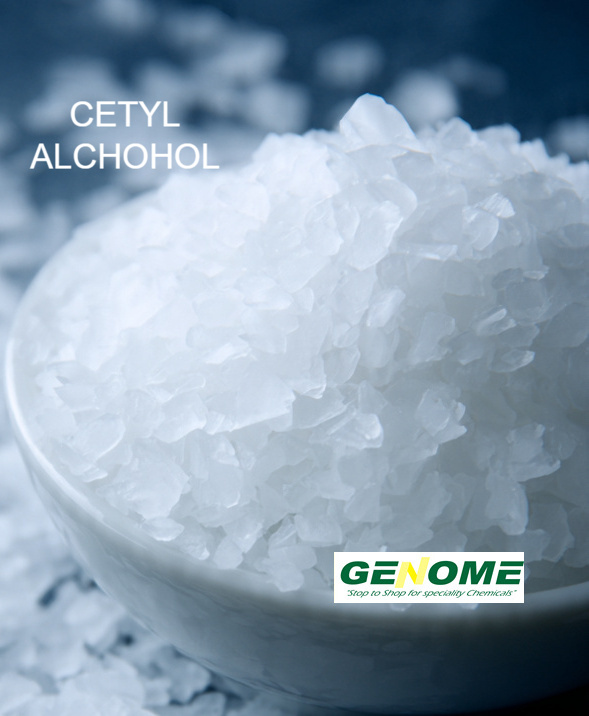
Genome Specialities FZC is a trusted supplier and exporter of high-quality Cetyl Alcohol, a premium fatty alcohol widely used in the cosmetic, personal care, pharmaceutical, food, and industrial sectors.
Cetyl Alcohol, also known as Hexadecan-1-ol or Palmityl Alcohol, is a naturally derived C16 fatty alcohol with the chemical formula C₁₆H₃₄O.
Unlike ordinary alcohols such as ethanol, Cetyl Alcohol is a non-drying fatty alcohol that acts as an excellent emulsifier, emollient, thickening agent, viscosity modifier, and stabilizer. It enhances the texture, stability, and moisturizing properties of a wide range of formulations.
Genome Specialities FZC supplies premium-quality Cetyl Alcohol to manufacturers worldwide, ensuring consistent quality, reliable supply, and competitive pricing.
Chemical & Physical Properties
| Property | Specification |
| Chemical Name | Cetyl Alcohol |
| Other Names | Hexadecan-1-ol, Palmityl Alcohol |
| Chemical Formula | C₁₆H₃₄O |
| Molecular Weight | 242.45 g/mol |
| Appearance | White Waxy Solid or Flakes |
| Odor | Mild Characteristic Odor |
| Melting Point | Approximately 49.3°C |
| Boiling Point | Approximately 344°C |
| Density | Approximately 0.811 g/cm³ |
| Solubility | Insoluble in Water; Soluble in Ether, Benzene & Chloroform; Slightly Soluble in Alcohol |
Key Properties & Functions
Emulsifier
Cetyl Alcohol helps combine oil and water phases to create stable emulsions, preventing separation in creams, lotions, and other cosmetic formulations.
Emollient
Forms a protective barrier on the skin that helps retain moisture while leaving the skin feeling soft, smooth, and conditioned.
Thickening Agent
Improves the viscosity and consistency of creams, lotions, shampoos, conditioners, and other personal care products.
Viscosity Modifier
Provides excellent texture and enhances product spreadability for a premium user experience.
Stabilizer
Improves formulation stability and extends product shelf life.
Opacifying Agent
Creates an attractive opaque appearance in creams, lotions, and personal care formulations.
Applications of Cetyl Alcohol
Cosmetics & Personal Care
Cetyl Alcohol is widely used in:
- Face Creams
- Moisturizers
- Body Lotions
- Cold Creams
- Anti-aging Creams
- Sunscreens
- Lipsticks
- Foundations
- Hair Conditioners
- Shampoos
- Hair Masks
- Beard Care Products
- Shaving Creams
- Body Butter
- Skin Care Products
Pharmaceutical Industry
Common applications include:
- Medicated Creams
- Ointments
- Topical Lotions
- Dermatological Preparations
- Pharmaceutical Emulsions
Food Industry(Food-grade material only)
Cetyl Alcohol may be used in approved food applications, including:
- Food Decorations
- Specialty Confectionery
- Flavoring Applications (where permitted by regulations)
Industrial Applications
Cetyl Alcohol is also widely used in:
- Lubricants
- Plasticizers
- Chemical Intermediates
- Surface Treatment Products
- Industrial Emulsions
- Fuel Additives
- Water Evaporation Control Products
- Specialty Chemical Manufacturing
Benefits of Cetyl Alcohol
- Excellent Moisturizing Properties
- Smooth and Creamy Texture
- Enhances Product Stability
- Superior Thickening Performance
- Easy to Formulate
- Improves Skin Feel
- Non-Drying Fatty Alcohol
- Excellent Emulsifying Ability
- Long Shelf Life
- Suitable for Cosmetic, Pharmaceutical, Food, and Industrial Applications
Reviews
There are no reviews yet.