
Description
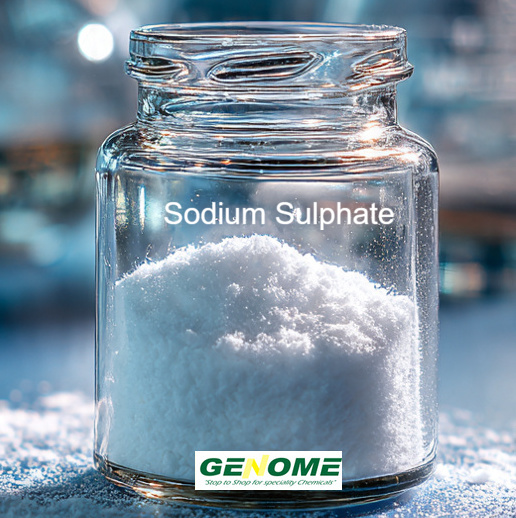
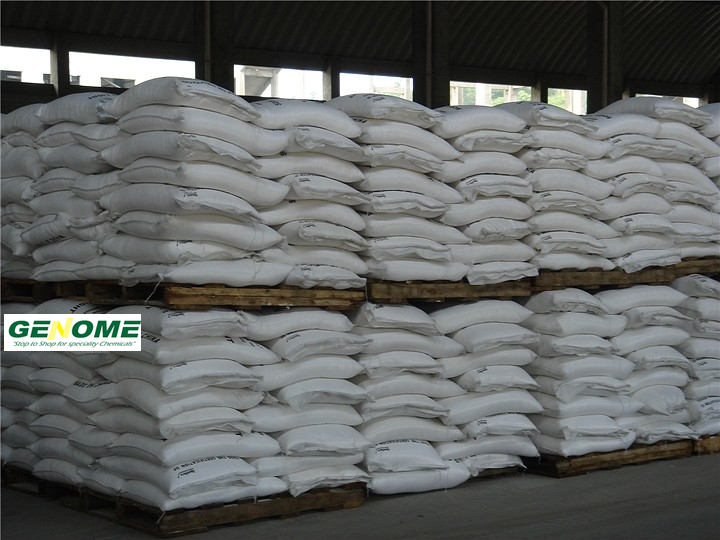
Genome Specialities is a leading Sodium Sulfate supplier, providing high-quality sodium sulfate (Na₂SO₄) for industrial, laboratory, pharmaceutical, and food applications.
Our products meet stringent quality standards and are available in Industrial, Reagent (ACS), Pharmaceutical (USP/EP/BP), and Food (FCC) grades to serve diverse industries.
Chemical Properties of Sodium Sulfate
| Property | Anhydrous Sodium Sulfate (Na₂SO₄) | Sodium Sulfate Decahydrate (Na₂SO₄·10H₂O, Glauber’s Salt) |
| Chemical formula | Na₂SO₄ | Na₂SO₄·10H₂O |
| Molar mass | 142.04 g/mol | 322.20 g/mol |
| Appearance | White crystalline solid | White crystalline solid |
| Odor | Odorless | Odorless |
| Density | 2.664 g/cm³ | 1.464 g/cm³ |
| Melting point | 884 °C | 32.38 °C |
| Boiling point | 1,429 °C | — (decomposes before boiling) |
| Solubility in water | Highly soluble; temperature dependent | Highly soluble; temperature dependent |
| Solubility in ethanol | Insoluble | Insoluble |
| Crystal structure | Orthorhombic | Monoclinic |
Applications of Sodium Sulfate
Detergents and Cleaning Products
Sodium sulfate is widely used as a filler in powdered laundry detergents and household cleaning products.
It improves the free-flowing properties of detergent powders, prevents caking, and helps manufacturers achieve consistent product quality while reducing production costs.
Pulp and Paper Industry
The pulp and paper industry uses sodium sulfate, commonly known as “salt cake,” in the Kraft process. It assists in breaking down lignin, allowing efficient separation of cellulose fibers for high-quality paper production.
Glass Manufacturing
Glass manufacturers use sodium sulfate as a fining agent to remove small air bubbles from molten glass.
Thus improves clarity, strength, and the overall quality of finished glass products.
Textile Industry
Sodium sulfate functions as a leveling agent during textile dyeing.
It promotes uniform dye penetration, ensuring even coloration while minimizing streaks and uneven shades.
Laboratory Desiccant
Anhydrous sodium sulfate is an effective drying agent used in laboratories. It removes residual moisture from organic solvents and liquids, making it an essential reagent in chemical analysis and research.
Major Grades of Sodium Sulfate
Industrial/Technical Grade
Industrial-grade sodium sulfate typically contains a minimum purity of 99% Na₂SO₄ widely used in detergent manufacturing, pulp and paper processing, glass production, textile dyeing, and other industrial applications where high purity and consistent performance are required.
Reagent Grade (ACS)
Reagent-grade sodium sulfate meets the strict quality specifications established by the American Chemical Society (ACS). With a purity of ≥99.0% and controlled impurity levels, it is ideal for laboratory testing, chemical analysis, research, and analytical procedures.
Pharmaceutical Grade (USP/EP/BP)
Pharmaceutical-grade sodium sulfate complies with USP, EP, and BP standards, ensuring exceptional purity and safety, commonly used in pharmaceutical manufacturing, tablet formulations, and medicinal applications, including the production of Glauber’s salt.
Food Grade (FCC)
Food-grade sodium sulfate meets Food Chemicals Codex (FCC) standards for food safety, used as a carrier, diluent, and processing aid in food manufacturing and food colorant formulations.


Reviews
There are no reviews yet.