


Description
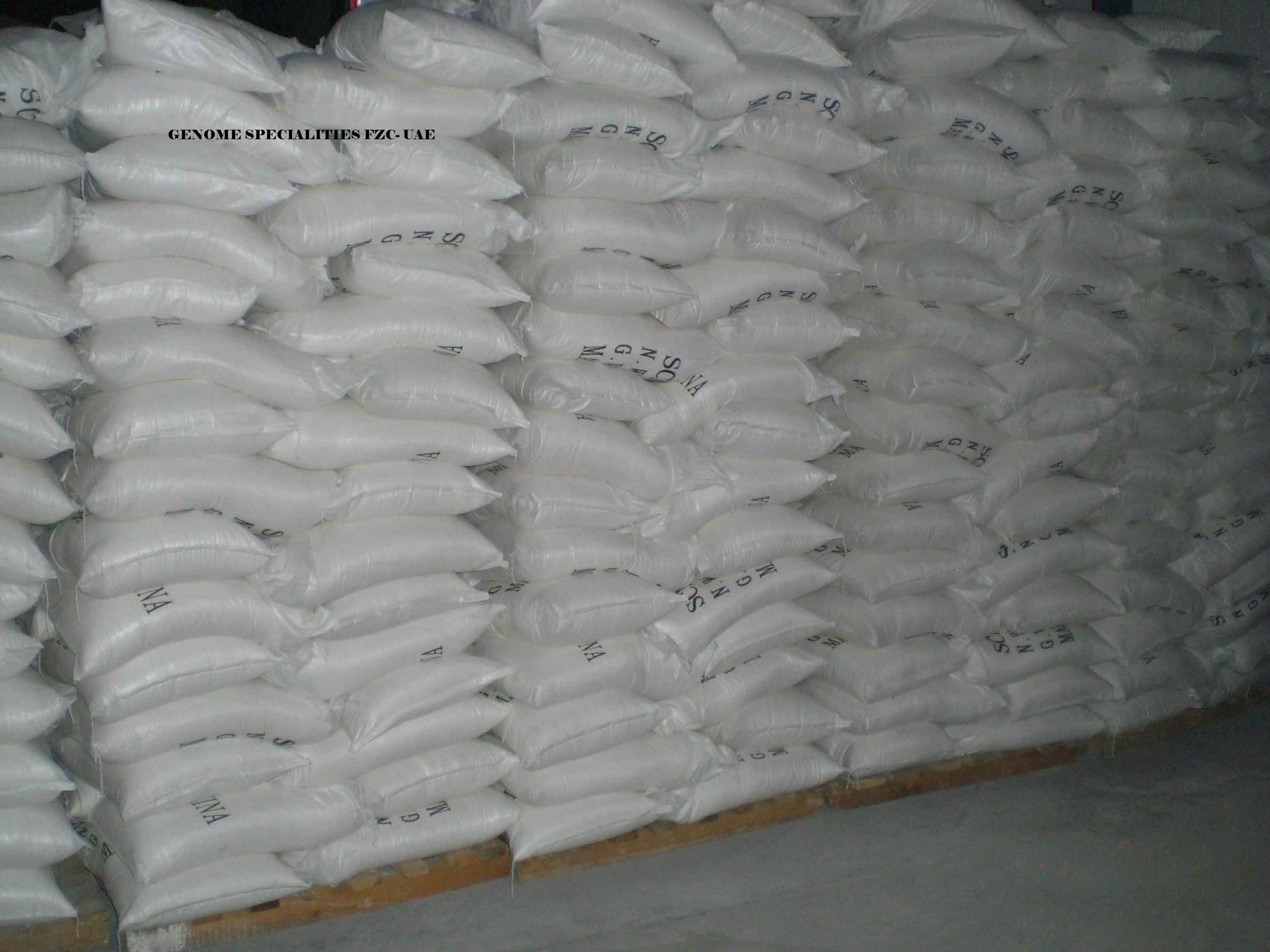
Genome Specialities is a leading Sodium Bisulfite supplier, providing high-quality sodium bisulfite (NaHSO₃) for industrial and commercial applications.
Our sodium bisulfite is widely used in food processing, water treatment, pulp and paper manufacturing, textiles, leather processing, photography, and chemical manufacturing.
We deliver consistent product quality, reliable availability, and efficient supply solutions to meet diverse industry requirements.
Sodium bisulfite (NaHSO₃), also known as sodium hydrogen sulfite, is an inorganic chemical compound available as a white to yellowish crystalline powder or as an aqueous solution.
It has a characteristic sulfur dioxide (SO₂)-like odor and is valued for its excellent antioxidant, preservative, and reducing properties.
Because of its versatility, sodium bisulfite is widely used across multiple industries where oxidation control, preservation, bleaching, and dechlorination are essential.
Chemical Properties of Sodium Bi Sulfite
| Property | Value / Description |
| Appearance | White to yellowish crystalline powder |
| Odor | Sulfurous / SO₂-like smell |
| Density | ~1.48 g/cm³ |
| Melting point | Decomposes before melting (~150 °C) |
| Boiling point | Not applicable (decomposes) |
| Vapor pressure | Negligible (solid) |
| Flash point | Not flammable |
| Shelf life | Limited (oxidizes over time) |
Applications of Sodium Bisulfite
Food and Beverage Industry
Sodium bisulfite is used as a food additive (E222) that acts as both a preservative and an antioxidant.
It helps prevent microbial growth, reduces oxidation, and maintains the color and freshness of dried fruits, vegetables, wines, and other processed foods. It also minimizes black spot formation in shrimp and supports corn starch and cheese processing.
Water Treatment
Water treatment facilities use sodium bisulfite as an effective dechlorination agent. It rapidly removes residual chlorine from treated water before discharge, helping protect aquatic ecosystems and ensuring compliance with environmental regulations.
Pulp and Paper Industry
Sodium bisulfite functions as a bleaching agent during pulp processing. It improves paper brightness and supports the production of high-quality paper products.
Photography
The photographic industry uses sodium bisulfite as a preservative in photographic developers, helping maintain solution stability and consistent image quality.
Textile and Leather Industry
Textile manufacturers use sodium bisulfite as a bleaching agent for cotton and wool to achieve uniform brightness.
It also plays an important role in leather tanning and finishing processes.
Chemical Manufacturing
As an effective reducing agent, sodium bisulfite is widely used in the production of dyes, specialty chemicals, and various industrial chemical processes where controlled reduction reactions are required.


Reviews
There are no reviews yet.