

Description
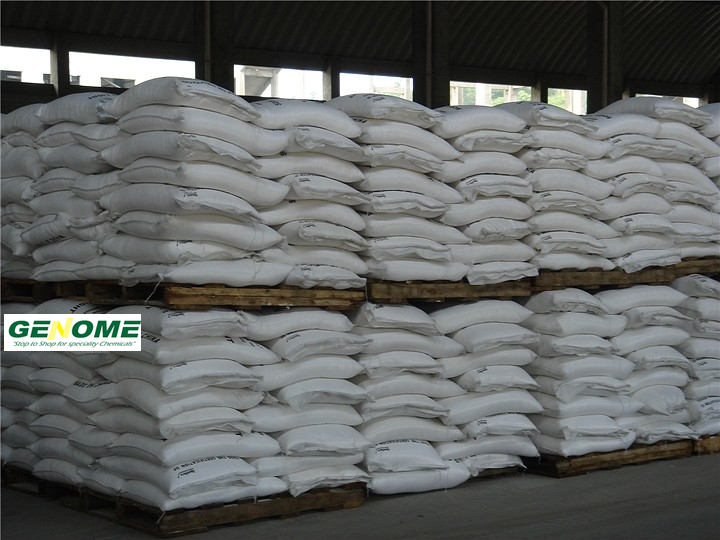
Genome Specialities fzc is a trusted supplier of high-quality EDTA 4Na for water treatment, detergents, cosmetics, textiles, and industrial applications.
EDTA 4Na, also known as tetrasodium EDTA, is a powerful and widely used chemical compound.EDTA (ethylenediaminetetraacetic acid) is a versatile chelating agent, meaning it can bind to and sequester metal ions. This property makes it useful in a wide range of applications across various industries, including medicine, food, cosmetics, and manufacturing.
Key Features of EDTA 4Na
- Powerful metal ion chelating agent
- Excellent water solubility
- Improves product stability and shelf life
- Enhances detergent and cleaning efficiency
- Prevents scale formation in water systems
- Compatible with most surfactants and formulation ingredients
- Stable in alkaline conditions
- Suitable for industrial, cosmetic, agricultural, and laboratory applications
Chemical Properties of Genome Specialities EDTA 4na
| Property | Specification / Value |
| Chemical Name | Tetrasodium Ethylenediaminetetraacetate |
| Common Name | EDTA-4Na |
| Chemical Formula | C₁₀H₁₂N₂Na₄O₈ |
| Molecular Weight | ~380.17 g/mol |
| Appearance | White crystalline powder or granules |
| Odor | Odorless |
| Solubility | Freely soluble in water; insoluble in organic solvents |
| pH (1% aqueous solution) | 10.5 – 11.5 |
| Chelating Ability | Strong chelating agent for Ca²⁺, Mg²⁺, Fe³⁺, Cu²⁺ |
| Stability | Stable under normal conditions; stable in alkaline media |
| Hygroscopic Nature | Slightly hygroscopic |
| Thermal Decomposition | Decomposes on heating; no sharp melting point |
| Functionality | Sequestering agent, water softener, metal ion stabilizer |
| Compatibility | Compatible with most surfactants and formulation ingredients |
Applications of EDTA 4Na
Detergents & Cleaning Products
EDTA 4Na is widely used in laundry detergents, dishwashing liquids, industrial cleaners, and household cleaning products.
It binds hardness minerals such as calcium and magnesium, allowing surfactants to perform more effectively while improving stain removal and cleaning efficiency.
Benefits
- Improves detergent performance
- Softens hard water
- Prevents soap scum formation
- Enhances cleaning power
Water Treatment
In water treatment systems, EDTA 4Na removes dissolved metal ions and helps prevent scale formation in pipes, boilers, cooling towers, and industrial equipment.
Benefits
- Water softening
- Heavy metal sequestration
- Reduces scaling
- Extends equipment lifespan
- Improves operational efficiency
Cosmetics & Personal Care
EDTA 4Na is commonly added to shampoos, facial cleansers, body washes, soaps, creams, lotions, and cosmetics. It stabilizes formulations by binding trace metal ions that may cause discoloration, oxidation, or ingredient degradation.
Benefits
- Extends product shelf life
- Improves preservative performance
- Prevents discoloration
- Maintains product quality
- Enhances foaming in shampoos and cleansers
Textile Industry
During textile dyeing and processing, EDTA 4Na removes unwanted metal ions that can interfere with dye performance, resulting in brighter, more consistent colors.
Benefits
- Improved dye uniformity
- Brighter fabric colors
- Better processing efficiency
Pulp & Paper Industry
EDTA 4Na protects hydrogen peroxide used in bleaching by preventing catalytic decomposition caused by metal contaminants such as manganese.
Benefits
- Increased bleaching efficiency
- Brighter paper products
- Reduced chemical consumption
Agriculture
EDTA 4Na is used in micronutrient fertilizers to chelate essential trace elements, making nutrients more available for plant uptake.
Benefits
- Improved nutrient absorption
- Increased fertilizer efficiency
- Healthier plant growth
Synthetic Rubber Manufacturing
As a result, EDTA 4Na helps stabilize the polymerization process in synthetic rubber manufacturing, leading to improved product quality and greater production efficiency
Metal Cleaning
EDTA 4Na is used in industrial cleaning formulations to remove rust, scale, and metal deposits without the harsh corrosiveness of strong acids (except on aluminum surfaces).
Benefits
- Removes mineral deposits
- Cleans rust and corrosion
- Less corrosive than acidic cleaners
Laboratory Applications
EDTA 4Na is widely used in laboratories for complexometric titrations and analytical chemistry to determine concentrations of metal ions accurately.
Advantages of EDTA 4Na
- Strong chelating capacity
- High water solubility
- Excellent formulation stability
- Effective in alkaline environments
- Cost-effective industrial additive
- Improves cleaning and processing performance
- Suitable for multiple industries
Genome Specialities FZC , supply premium-quality EDTA 4Na with consistent purity and performance for industrial, cosmetic, water treatment, agricultural, and laboratory applications. Our products meet strict quality standards, ensuring reliable performance, competitive pricing, and dependable supply for businesses worldwide.
Contact us today for pricing, technical specifications, bulk orders, and customized packaging solutions.

Reviews
There are no reviews yet.