
Description
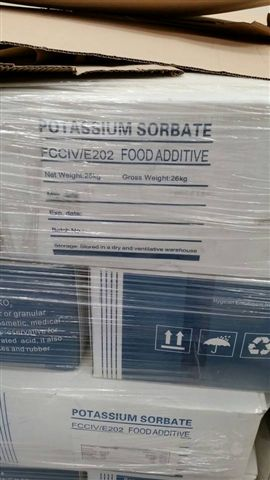
Genome Specialities FZC is a trusted Potassium sorbate supplier providing high quality potassium sorbate for food, beverage, pharmaceutical, cosmetic, and industrial applications.
Potassium sorbate is the potassium salt of sorbic acid, widely used as a food preservative.
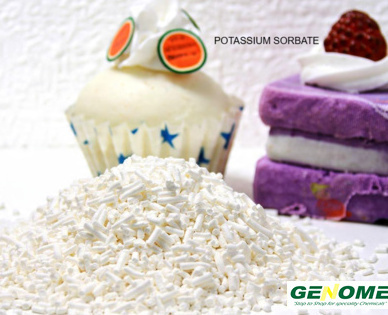
Genome Specialities FZC potassium sorbate is a white crystalline powder or granule with excellent water solubility and powerful antimicrobial properties.
Potassium Sorbate inhibits the growth of molds, yeasts, and certain bacteria, helping manufacturers extend product shelf life while maintaining product quality
Chemical Properties of Genome Specialities Pottassium sorbate
| Property | Description / Value |
|---|---|
| Chemical Name | Potassium sorbate |
| CAS Number | 24634-61-5 |
| Molecular Formula | C₆H₇KO₂ |
| Molecular Weight | 150.22 g/mol |
| Appearance | White to off-white crystalline powder or granules |
| Odor | Odorless or faint characteristic odor |
| Taste | Slightly bitter |
| Solubility in Water | Highly soluble (≈ 58 g/L at 20 °C) |
| Solubility in Organic Solvents | Slightly soluble in alcohol; insoluble in oils |
| Density | ~1.36 g/cm³ |
| Melting Point | Decomposes above ~270 °C (no true melting) |
| pH (1% aqueous solution) | ~7.5–8.5 |
| Hygroscopicity | Slightly hygroscopic |
| Stability | Stable under normal storage conditions |
BENEFITS OF POTASSIUM SORBATE
GENOME SPECIALITIES FZC supplies premium-quality Potassium Sorbate that meets international standards for food safety, quality, and performance.
Our Food Grade Potassium Sorbate is widely used by food manufacturers, beverage companies, cosmetic formulators, and pharmaceutical producers.
Potassium sorbate is an effective antimicrobial that works by inhibiting the growth of yeasts, molds, and some bacteria. It’s particularly useful in products with a low pH.
It’s a popular preservative because it doesn’t alter the taste, color, or smell of the food. You can find it in a wide range of products:
Foods: cheese, yogurt, dried fruits, baked goods, soft drinks, and fruit juices.
Beverage Industry:
Beverage manufacturers and winemakers use Potassium Sorbate (E202) as a reliable preservative and wine stabilizer to prevent re-fermentation in wines and other sugar-containing beverages.
Personal Care & Cosmetics:
Manufacturers add Potassium Sorbate to cosmetics and personal care products, including shampoos, creams, lotions, and moisturizers, to protect formulations from microbial contamination and improve shelf stability.
GRADES OF POTASSIUM SORBATE
Potassium sorbate is commonly sold in different grades depending on its intended use and purity requirements.
The main grades of Potassium Sorbate are mentioned below:
Food Grade
Used as a preservative in foods and beverages.
Meets food-safety standards set by regulatory authorities.
Typical purity is around 99% or higher.
Common applications: cheese, baked goods, fruit products, sauces, wine, and soft drinks.
Pharmaceutical Grade
Since its used in medicines, it has more strict quality standards than food grade.
Used in oral medicines, syrups, topical products, and some medical formulations.
Requires tighter controls on impurities and documentation.
Cosmetic Grade
Used as a preservative in personal care products.
Common in creams, lotions, shampoos, and makeup.
Must meet cosmetic regulatory requirements for purity and safety.
Industrial/Technical Grade
Used in non-food, non-pharmaceutical applications.
May have different impurity limits and is generally not intended for direct human consumption.
Applications can include certain industrial formulations and specialty products.
Typical Specifications for Food Grade Potassium Sorbate
Assay (purity): 99.0–101.0%
Appearance: White granules or powder
Solubility: Soluble in water
Moisture and heavy metals: Controlled within specified limits
Reviews
There are no reviews yet.